
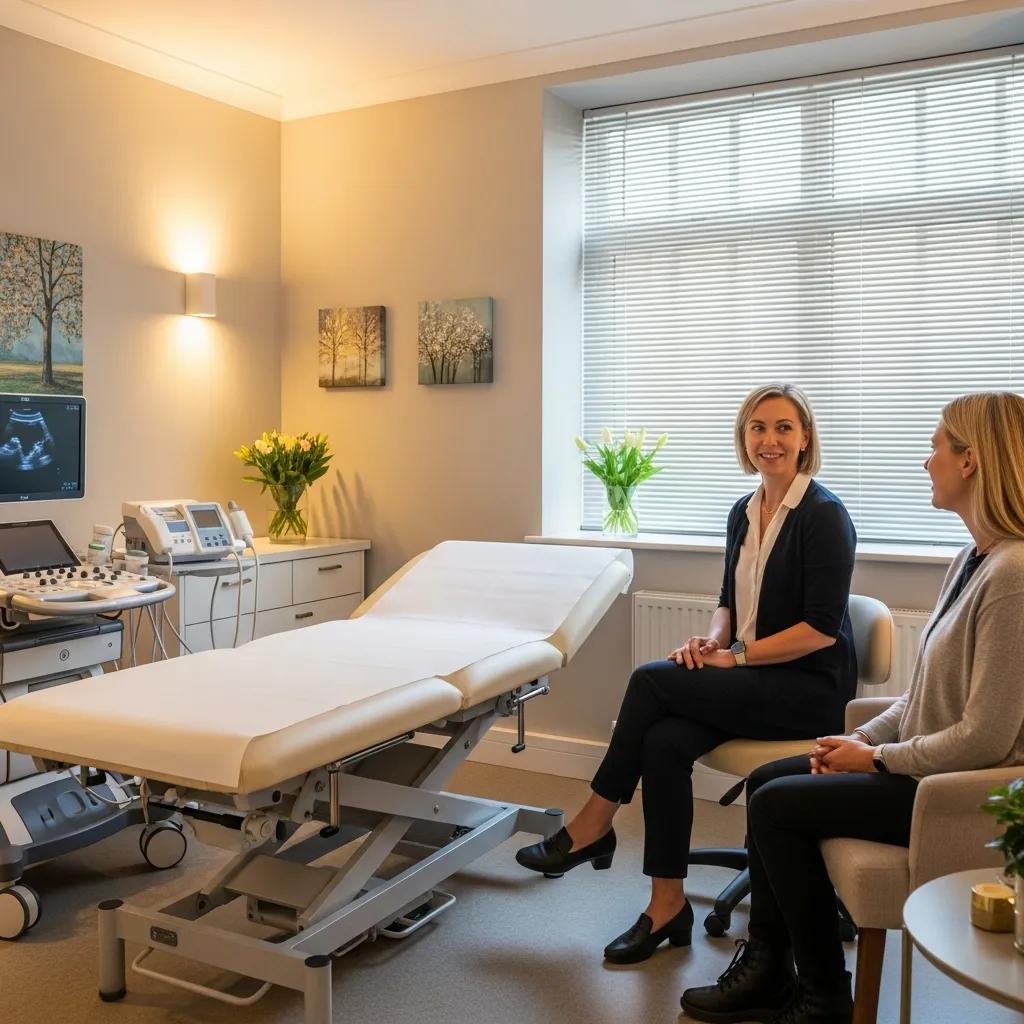
Why Choose Private Gynaecology Services in London: Benefits, Expert Care, and Fast Access
Private gynaecology in London provides faster access to specialist assessment and personalised care, helping women resolve concerns quickly and with greater continuity than many conventional pathways. This article explains the practical advantages of private women’s health options, including how faster appointments, confidential consultations and advanced diagnostics improve outcomes for common and complex problems. Readers will learn what to expect from private gynaecology clinics in London, how clinics structure consultations and investigations, and which services — from routine screening to menopause management and early pregnancy scans — are commonly offered. We also map how specialist care is delivered, outline accessibility and multilingual support, and describe booking and pricing considerations so you can decide whether private care is the right choice. The focus will remain on the topic of private gynaecology in London while using AristoGp as a concrete example of clinic-level implementation where relevant.
What Are the Key Benefits of Private Gynaecology in London?
Private gynaecology delivers several distinct benefits that address common pain points in women’s health: shorter waiting times, more time with a specialist, access to advanced diagnostics, and greater choice of clinician. Faster access reduces diagnostic delay and enables earlier treatment, personalised consultations allow tailored screening and management plans, and private clinics often offer continuity of care with named specialists. These advantages are particularly relevant in a city like London where prompt assessment can reduce anxiety and speed up referral pathways when secondary care is needed. The next paragraphs list the core benefits and then compare typical waiting times in a compact, EAV-style table for clarity.
Private gynaecology in London commonly emphasises confidentiality and personalised care, ensuring sensitive topics are explored fully. This privacy supports accurate history-taking, targeted physical examination and shared decision-making about treatment options. Patients also typically have access to same-day or rapid imaging such as ultrasound, which reduces the number of visits needed to reach a diagnosis. Understanding the scheduling and diagnostic benefits leads naturally to a direct comparison of typical waits between conventional NHS pathways and private clinics.
Private gynaecology advantages at a glance:
- Faster specialist appointments and reduced waiting times.
- Longer consultations for thorough history-taking and shared decision-making.
- Access to on-site diagnostics and quicker test results.
- Greater choice and continuity with named specialists.
- Confidential, culturally sensitive consultations and multilingual support.
These benefits form the foundation for practical decisions about care and are illustrated in the following comparison table.
Different care pathways produce varying waiting times and access to diagnostics:
| Pathway | Typical Wait for Specialist Appointment | Typical Access to Diagnostics |
|---|---|---|
| NHS referral | Weeks to months depending on triage and region | Imaging scheduled via hospital with longer lead times |
| Private clinic | Days to a couple of weeks for routine appointments | On-site or fast-track imaging and same-day test coordination |
| Private quick-access for urgent symptoms | 24–72 hours in many clinics | Rapid ultrasound and expedited results reporting |
This table highlights the time and diagnostic-access advantages of private pathways, which often translate into earlier diagnosis and treatment. The faster timelines make clear why some patients prioritise private gynaecology for time-sensitive issues.
How Do Faster Appointments Improve Your Women's Health Care Experience?

Faster appointments reduce delays in diagnosis and treatment, which is critical for conditions where timing affects outcomes or anxiety levels. When a patient sees a specialist sooner, necessary investigations such as pelvic ultrasound or targeted blood tests can be arranged quickly, shortening the time between symptom onset and management. This acceleration limits the emotional burden associated with uncertainty and often allows clinicians to start appropriate therapy earlier. Early assessment also helps differentiate benign from more serious pathology faster, enabling urgent referral when needed and avoiding unnecessary prolonged surveillance.
Quicker access supports faster reassurance for benign conditions and quicker escalation for conditions that require definitive treatment. Prompt consultations therefore improve both clinical outcomes and patient well-being, and they reduce the cumulative time spent navigating multiple appointments, which is especially valuable for working patients or those with caregiving responsibilities. The next section explains why personalised and confidential care is equally important in private gynaecology.
Why Is Personalised and Confidential Care Essential in Private Gynaecology?
Personalised care means longer consultations, tailored screening and bespoke follow-up plans that reflect a patient’s history, preferences and cultural context. Longer appointment slots allow specialists to gather a more complete medical and psychosocial history, review prior records and explain management options clearly. Confidential environments encourage open discussion of sensitive issues such as sexual health, incontinence, pelvic pain or fertility concerns, which improves diagnostic accuracy and adherence to recommended plans.
Confidentiality and patient-centred communication also permit shared decision-making about investigations or treatments, reducing decisional conflict. When consultations are personalised, clinicians can sequence investigations efficiently — for example, arranging a targeted ultrasound within the same visit — which shortens the diagnostic pathway. This focus on individualised care naturally leads to consideration of how specific clinics deliver expert services, as covered in the next section.
How Does AristoGp Provide Expert Private Gynaecology Services in London?
AristoGp offers private gynaecology within a central London (EC1N) clinic model that emphasises rapid access, continuity and multilingual consultations. The clinic pairs named specialists with on-site diagnostics to shorten the time from assessment to results, and the care model supports private consultations without mandatory GP referrals where appropriate. AristoGp’s team includes Dr. Anastasia Mermigka and Dr. Georgios Schoinas, both involved in gynaecology and obstetrics services, contributing named continuity of care that many patients seek.
Clinic-level features that strengthen clinical outcomes include access to timely ultrasound diagnostics and same-visit coordination of follow-up testing, which helps avoid delays inherent in multi-site pathways. AristoGp also highlights multilingual consultations in English, Greek, Italian and Bulgarian to support London’s diverse patient population. These structural elements aim to improve patient experience and diagnostic reliability while keeping the focus on evidence-based management.
Key clinic capabilities often valued by patients:
- Named specialists for continuity and follow-up.
- On-site or fast-track imaging to speed diagnosis.
- Multilingual consultations to improve communication.
- Short-notice appointments for urgent concerns.
Understanding the people who lead care helps build trust, and the next subsection profiles one of the clinic’s specialists.
Who Is Dr. Anastasia Mermigka and What Is Her Role as a Specialist?
Dr. Anastasia Mermigka is a specialist in gynaecology and obstetrics who provides patient-centred consultations and continuity through diagnosis and treatment planning. She focuses on thorough history-taking, clear explanation of investigations and collaborative decision-making to align management with each patient’s priorities. Dr. Mermigka’s approach emphasises practical diagnostic steps such as targeted ultrasound and evidence-based referral pathways when secondary care is required.
Patients seeking a named clinician often value the continuity and clarity this brings, particularly when managing chronic or complex issues such as pelvic pain, fertility concerns or menopause symptoms. Her role integrates specialist assessment with coordinated follow-up to ensure investigations are reviewed and next steps communicated promptly.
What Advanced Diagnostics and Technologies Are Used at AristoGp?
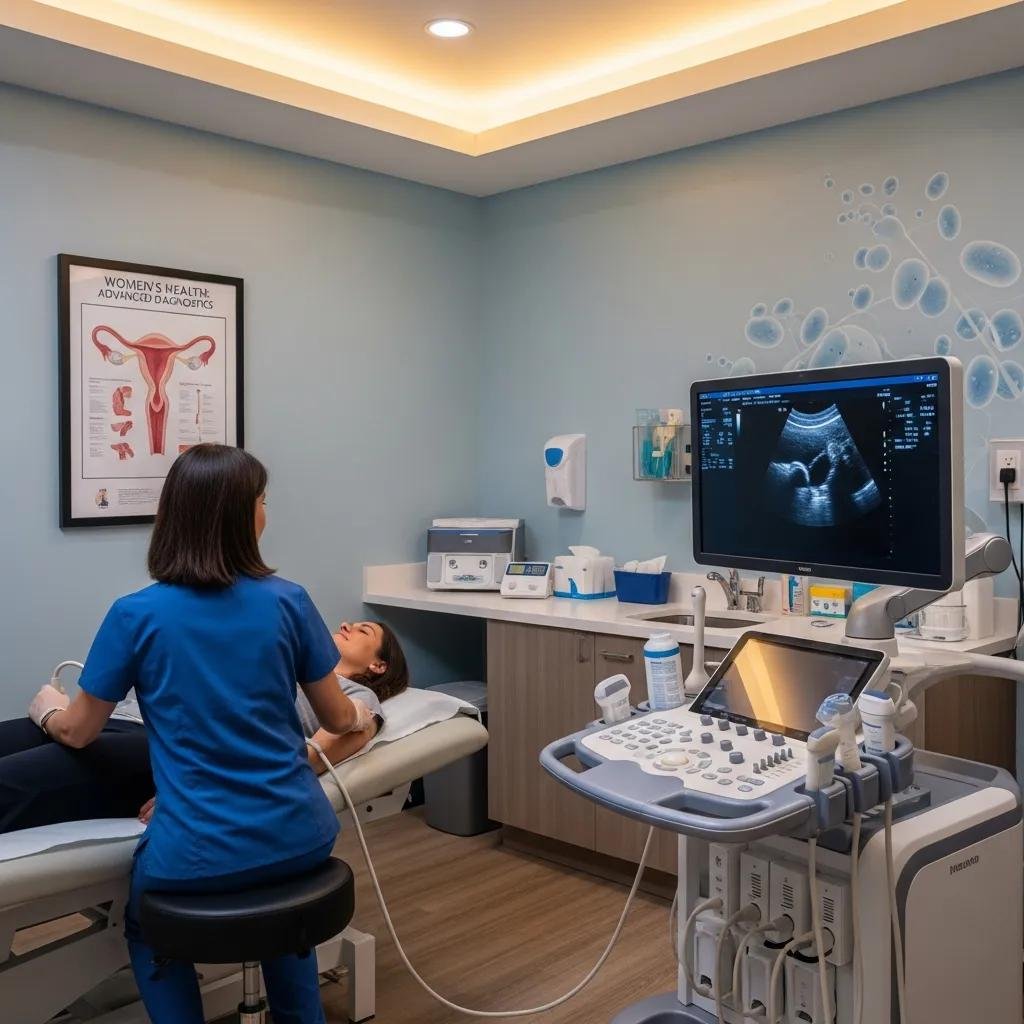
AristoGp uses on-site imaging and coordinated diagnostic workflows to accelerate assessment and interpretation of results, enabling faster clinical decisions. Commonly used tools include pelvic ultrasound for structural assessment, early pregnancy scans for viability checks and rapid access to laboratory testing for hormonal or infection screening. These resources reduce the number of separate visits needed and allow clinicians to interpret imaging and tests in the context of a single consultation.
The presence of rapid diagnostics facilitates same-day decision-making — for example, identifying an ovarian cyst that can be monitored versus a finding that requires urgent referral.
Suggested ALT text for clinic imaging photos could read: “Pelvic ultrasound machine used for rapid outpatient gynaecological assessment”
Having diagnostic capability on-site naturally leads to a broader service offer, described in the next section.
What Comprehensive Gynaecology Services Does AristoGp Offer?
Comprehensive private gynaecology services encompass routine screening, acute and chronic problem assessment, menopause care, fertility advice and early pregnancy support — all designed to provide a full pathway from consultation to follow-up. Services are structured around timely assessment, clear communication and evidence-based management, with options for in-clinic imaging and personalised care plans. The next paragraphs list core services and present an EAV-style table to help patients match needs to likely next steps.
Common service categories include routine gynaecological assessments, cervical screening, menopause consultations with HRT discussion where appropriate, fertility assessments and early pregnancy scans. Each service is designed to guide patients toward the most relevant investigations and referrals, whether that means monitoring, medical therapy or onward specialist care. Short CTAs in clinic materials encourage booking appropriate assessments when symptoms or routine needs arise.
Service comparison — what each service includes and who it suits:
| Service | What it includes | Intended outcome / Who it suits |
|---|---|---|
| Routine gynaecological assessment | History, pelvic exam, smear/cervical screening where due | Women due a check-up or with non-urgent symptoms |
| Menopause care | Symptom review, HRT discussion, targeted blood tests | Perimenopausal or menopausal patients seeking symptom control |
| Fertility advice | Initial assessment, basic investigations, referral planning | Couples or individuals starting fertility investigations |
| Early pregnancy scan | Viability and gestational dating ultrasound | Women with early pregnancy concerns or dating needs |
This table helps clarify which appointment type matches common needs and guides patients to choose the right service. The following subsections explain routine assessments and private menopause/fertility pathways.
Which Routine Gynaecological Assessments Are Available?
Routine assessments cover cervical screening (smear tests), pelvic examinations, contraceptive reviews and symptomatic reviews for issues such as abnormal bleeding or discharge. A standard visit includes a detailed medical and sexual health history, focused physical examination and appropriate testing or referral. For cervical screening, results and follow-up are explained clearly, and abnormal results prompt defined pathways for colposcopy or specialist review if needed.
Contraceptive consultations review current methods, discuss alternatives and arrange necessary checks, fitting or prescriptions. These routine services are aimed at preventing disease, resolving common symptoms and supporting reproductive goals, and they link directly to other services such as fertility advice when indicated. The next section details how menopause and fertility advice are handled in private care.
How Are Menopause Care and Fertility Advice Delivered Privately?
Private menopause care typically begins with a comprehensive symptom assessment, measurement of relevant biomarkers when indicated and discussion of HRT and non-hormonal options suited to the individual. Consultations allow time to weigh risks and benefits in the context of personal medical history and lifestyle, and follow-up is arranged to monitor response and adjust therapy. This tailored approach helps patients navigate perimenopause and menopause with structured support and clear safety monitoring.
Fertility advice in a private setting provides early-stage assessment, including history, baseline investigations and discussion of investigation sequencing or referral to fertility services if needed. Initial private assessment can speed up decision-making about further tests or assisted conception pathways and helps couples prioritise next steps. Both menopause and fertility consultations are designed to be practical and evidence-led, setting expectations for investigation and timelines that will be followed up as needed.
How Does AristoGp Ensure Accessibility and Convenience for Private Gynaecology Patients?
Accessibility and convenience are addressed through flexible booking options, a central London location (EC1N), multilingual consultations and the availability of telemedicine where appropriate. Flexible scheduling reduces barriers for working patients, while a central location supported by public transport improves physical access across London. Multilingual consultations in English, Greek, Italian and Bulgarian help reduce communication barriers for diverse patients, improving diagnostic clarity and patient comfort.
Clinics often pair short-notice appointments with rapid diagnostics to create a streamlined pathway from symptom to result, and telemedicine offers a useful triage and follow-up option when physical examination is not immediately required. Together, these features reduce friction in the patient journey and speed up progression from assessment to management. The following subsections clarify referral requirements and multilingual support in practice.
Can You Book a Private Gynaecologist Appointment Without a GP Referral?
Yes — many private gynaecology clinics accept direct referrals from patients without a GP referral, allowing you to arrange an assessment independently. Booking directly is appropriate for routine checks, contraceptive advice, early pregnancy scans and many symptomatic queries; however, patients should check insurance terms if they plan to claim for treatment, as some insurers require a GP or consultant referral. When attending a first appointment, bring any relevant medical records or letters to help the specialist interpret prior investigations.
Direct booking accelerates access but does not replace the need for coordinated care if hospital-level treatment is required; clinicians will arrange onward referral to secondary care when indicated. Understanding booking options and documentation needs naturally leads to how multilingual support is organised at the clinic.
What Multilingual Support Is Available for Diverse London Patients?
Multilingual consultations are available in English, Greek, Italian and Bulgarian, enabling patients to consult in their preferred language with clinicians or staff who speak those languages. When booking, patients can request a consultation in a preferred language so the clinic can schedule appropriately; this improves shared decision-making and reduces misunderstanding. Language-concordant consultations often lead to more precise history-taking and better adherence to follow-up plans.
If a same-language clinician is not available, clinics may provide alternative arrangements such as booking at a different time or offering additional written materials in the patient’s language. Clear communication options improve patient experience and diagnostic accuracy, which is discussed next when we describe the typical patient journey at the clinic.
What Is the Patient Experience Like at AristoGp's Central London Clinic?
The patient journey typically begins with flexible booking, followed by a preparatory call or form to gather history, a focused specialist consultation and coordinated follow-up or investigations. During the first visit, clinicians prioritise a clear explanation of findings, outline recommended investigations and provide an actionable plan with anticipated timelines for results and next steps. Reception and administrative support aim to streamline appointment logistics, and the central London location is chosen for accessibility and convenience.
Patients frequently report that named clinician continuity and clear communication reduce anxiety and increase confidence in the care pathway. The clinic model emphasises structured follow-up, meaning test results and management plans are communicated in a timely manner. The next subsections outline the practical booking and consultation process and summarise common themes emerging from patient feedback.
How Does the Booking and Consultation Process Work?
Booking is designed to be simple: patients choose an appointment type, provide a brief history or reason for attendance, and indicate any language preference or urgent timing needs. At the consultation, the clinician conducts a focused history and examination, orders or performs appropriate investigations such as on-site ultrasound, and explains the likely next steps including follow-up or referral. Estimated durations and what to bring (e.g., prior reports, medication lists) are provided in advance to make visits efficient.
Typical timelines and communication methods for results are discussed during the visit, and follow-up appointments are scheduled as needed to review investigations or therapy response. This clarity in process reduces uncertainty and helps patients plan logistics around appointments. Understanding this practical workflow makes it easier to see the clinic’s approach to patient feedback.
What Do Patient Testimonials Reveal About AristoGp's Private Gynaecology Care?
Patient feedback commonly highlights speed of access, clear explanations from clinicians and the reassurance of named specialist continuity. These themes reflect the clinic’s emphasis on rapid diagnostics and patient-centred communication, which together shorten diagnostic timelines and improve the patient experience. Comments also frequently note the value of multilingual support in making consultations more comfortable and comprehensible.
Such feedback underscores how operational features — prompt appointments, on-site imaging and extended consultation times — combine to deliver better perceived quality of care and faster resolution of concerns. Having described the experience, the following section explains pricing, packages and how to book in practice.
How Can You Book and What Are the Pricing Options for Private Gynaecology at AristoGp?
Transparent pricing and clear booking steps make it straightforward to choose the right appointment and understand what is included. Typical private gynaecology offerings include standard consultation fees and optional imaging or packages for combined assessment and scan; clinics sometimes run limited-time offers, such as a holiday special referenced for a specific validity window. Payment and insurance guidance is provided at booking so patients understand whether fees are payable directly or claimable through insurers.
Below is a simple packages table that illustrates typical package composition and notes on promotional validity. After the table, concise booking steps explain how to arrange an appointment and what information is useful to provide.
Intro to pricing table: The table summarises illustrative package options, what they include and any promotional notes to help patients compare choices.
| Package | Inclusions | Price / Note |
|---|---|---|
| Standard Consultation | Specialist assessment, management plan | Contact clinic for current fee |
| Scan & Consultation Package | Consultation plus pelvic/early pregnancy scan | Price varies; enquire at booking |
| Menopause Review Package | Symptom review, blood tests discussion, follow-up plan | Promotional offers may apply (check validity) |
This table clarifies common package structures; for up-to-date pricing and any current promotions, ask the clinic when you book. The next subsection gives concrete booking steps.
What Are the Consultation Fees and Available Packages?
Standard consultation fees typically cover the specialist review and initial management plan, while additional charges may apply for on-site imaging or extended procedures. Package options commonly bundle a consultation with an ultrasound or targeted tests to provide a single upfront price that can be more convenient and cost-effective for patients needing combined assessment. Clinics sometimes advertise limited-time promotions during holiday periods; note the specific validity dates when offers are mentioned.
Payment methods and insurance reimbursement vary by provider and insurer; patients planning to claim should check terms with their insurer before booking. Clear upfront communication about inclusions and likely additional costs helps avoid surprises and supports informed decision-making about which package best matches clinical needs.
How Do You Book Your Private Gynaecology Appointment?
To book, follow a simple stepwise approach that prioritises clarity and efficient scheduling:
- Decide which appointment type you need (routine check, menopause review, fertility advice, or early pregnancy scan).
- Provide brief medical history and any preferences (language, urgent timing) when requesting the appointment.
- Confirm any package or scan requirements and ask about promotional offers or payment/insurance details.
- Attend the consultation with prior medical records if available and plan for follow-up as advised by the clinician.
If you want to discuss urgent symptoms, indicate this at the time of booking so the clinic can prioritise appropriately. Clear booking steps and preparation make the consultation more productive and ensure rapid progression to diagnosis and treatment where needed.